Emily Wyatt Emily Wyatt

Concierge vs Traditional: A Modern Approach

Raleigh real estate agents have more marketing options than ever, but most are still invisible where it matters. This breakdown explains why concierge marketing is replacing traditional agencies in competitive local markets.

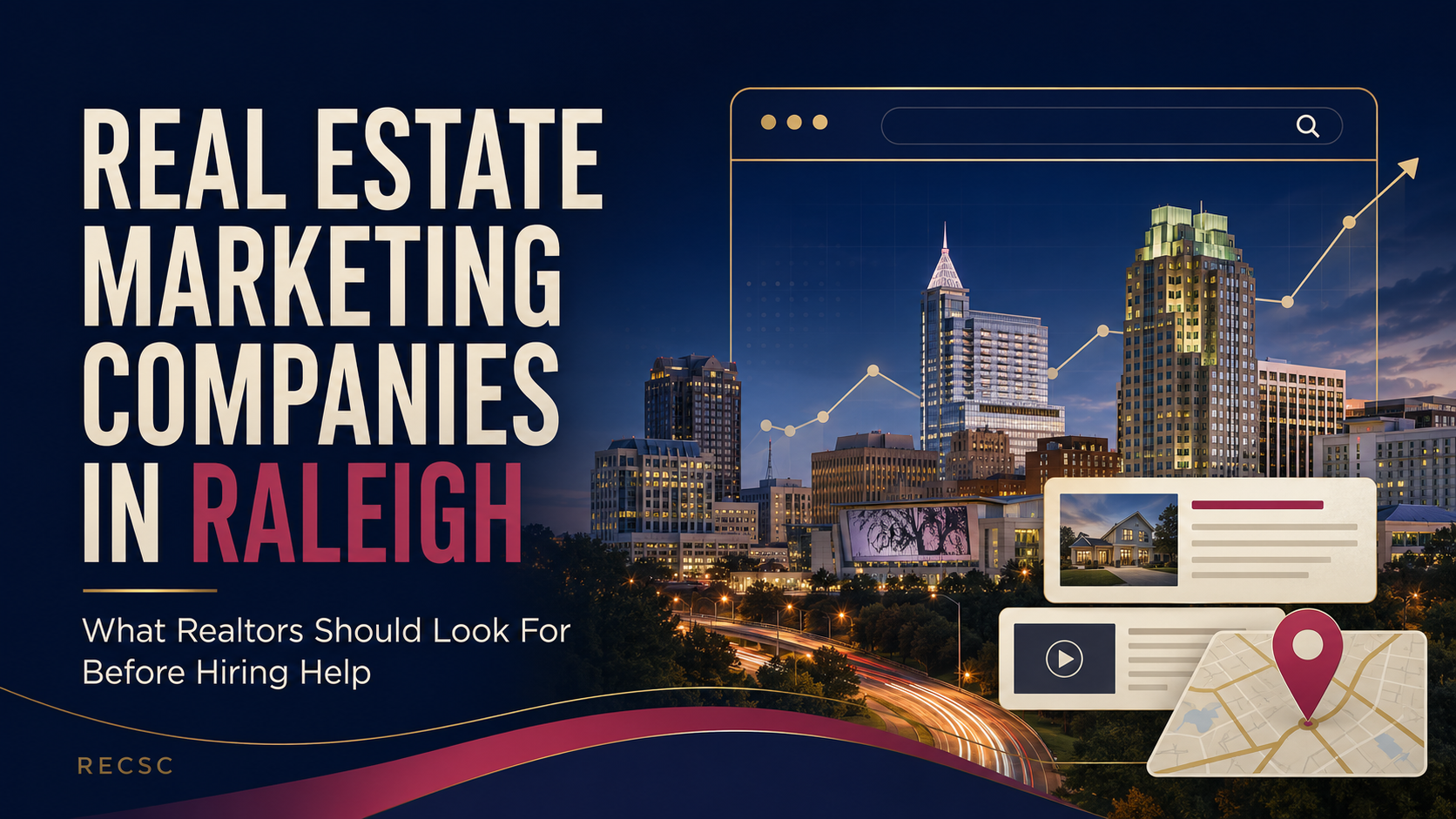
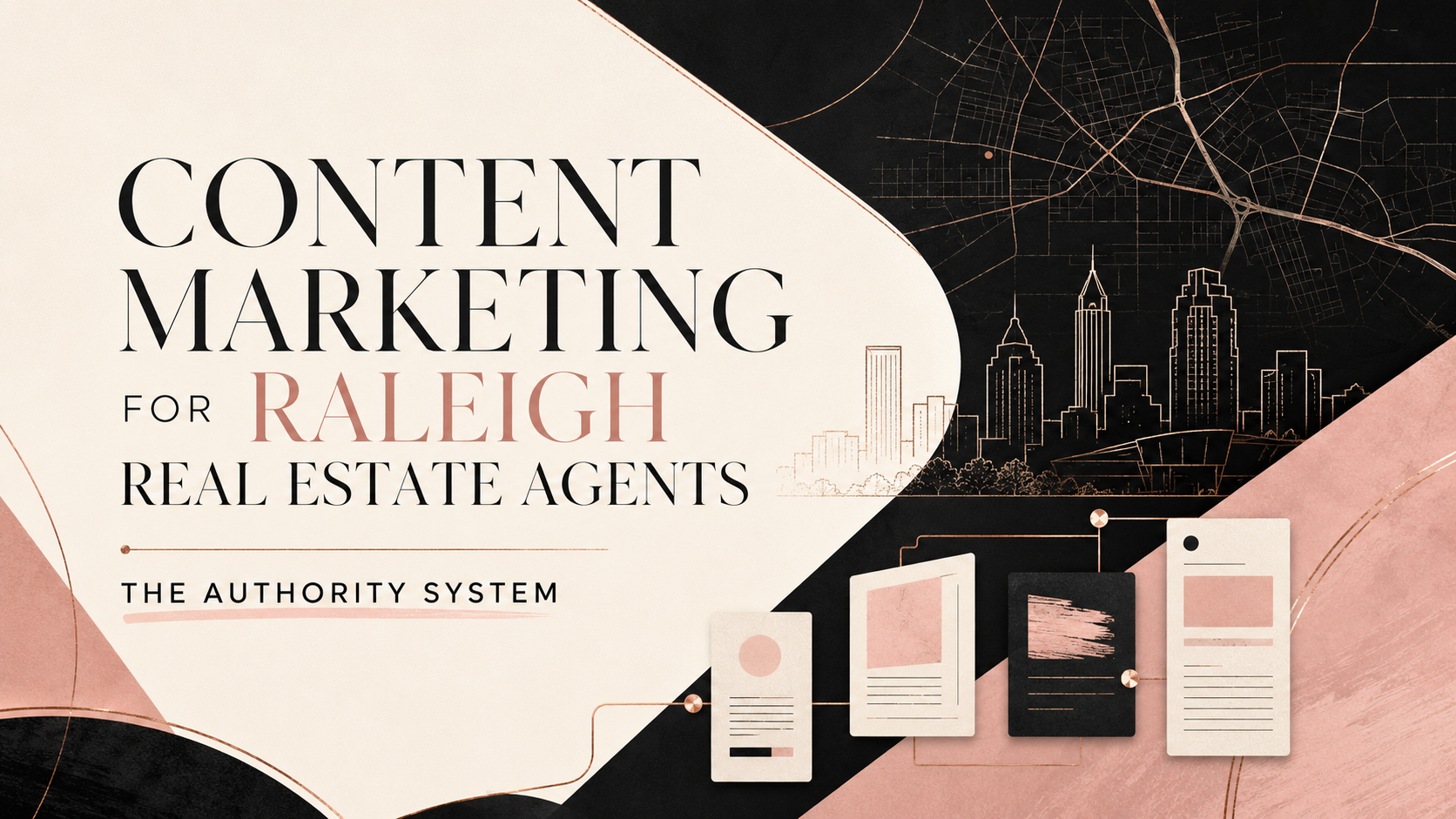
Real estate concierge marketing compared to traditional agencies in Raleigh, NC

A modern view of downtown Raleigh, North Carolina, representing the local real estate market and the shift from traditional marketing agencies to concierge real estate marketing strategies.

Raleigh real estate agents are not short on marketing options. What they are short on is clarity.

Agencies promise growth. Platforms promise automation. Coaches promise scale. Meanwhile, many agents are still invisible on Google, inconsistent on social media, and overwhelmed behind the scenes.

That gap is exactly why concierge real estate marketing has emerged as a serious alternative to traditional marketing agencies, especially in competitive markets like Raleigh, NC.

If you are trying to decide which model actually supports growth instead of adding more complexity, this breakdown will help.

The Real Problem Raleigh Agents Are Facing

Most Raleigh agents do not have a talent problem. They have a systems problem.

The market is crowded. Buyers and sellers are more informed. Relocation searches are hyper local. Visibility matters more than volume.

Traditional marketing models were built for brands with full teams, predictable budgets, and long runways. Most agents do not operate that way.

That mismatch is where things start to break down.

How Traditional Marketing Agencies Typically Work

Traditional agencies usually operate on one of two models:

• Monthly retainers with predefined deliverables
• Project-based work focused on campaigns or launches

What they are good at:
• Big-picture branding
• Isolated campaigns
• Polished creative assets

Where agents struggle:
• Long onboarding cycles
• Fixed deliverables that do not flex
• Little understanding of real estate workflows
• Minimal involvement after delivery

Most agencies hand off assets. They do not stay embedded in your day-to-day business.

That matters more than agents realize.

What a Real Estate Concierge Marketing Partner Does Differently

A concierge real estate marketing partner works inside your business, not outside of it.

Instead of asking, “What campaign do you want to run?” the question becomes:
“What is breaking right now, and what actually moves the needle?”

Concierge marketing focuses on:
• Visibility across Google, social, and local search
• Consistency without burnout
• Systems that support real estate workflows
• Execution, not just strategy

This model is especially effective for Raleigh agents because the market demands both speed and precision.

Concierge vs Traditional, Side by Side

Traditional Agency

• Rigid scope
• Limited flexibility
• Marketing knowledge first, real estate second
• Often disconnected from daily operations

Concierge Marketing Partner

• Flexible, adaptive support
• Deep understanding of real estate workflows
• Embedded in content, systems, and execution
• Focused on ROI and sustainability

One is transactional.
The other is relational.

Why This Matters in the Raleigh Market Specifically

Visibility on Google Maps and local search often determines which agents get the call first.

Raleigh is not a generic market.

You are competing with:
• Relocation buyers from high-cost states
• Agents with massive teams and budgets
• Local specialists dominating Google Maps
• Brokerages pushing internal marketing solutions

A concierge partner understands:
• Hyper local SEO
• Neighborhood-based content strategy
• Relocation behavior and search intent
• How agents actually operate week to week

That local context is not optional anymore.

Cost, ROI, and the Hidden Difference Most Agents Miss

Traditional agencies often look cheaper on paper until you factor in:
• Add-on fees
• Long-term contracts
• Unused deliverables
• Time spent managing the agency

Concierge marketing prioritizes:
• ROI over output
• Flexibility over lock-in
• Execution over presentations

Agents who switch often realize they are not paying more. They are just paying smarter.

Who Concierge Marketing Is Best For

Concierge real estate marketing is a strong fit if you:
• Want consistent visibility without hiring a full team
• Need help executing, not just planning
• Are tired of one-size-fits-all solutions
• Care about Google visibility and local authority

If you want hands-off, generic marketing, an agency may work.

If you want results tied to how real estate actually works, concierge is the better fit.

Final Thought

The right question is not:
“Which option is cheaper?”

The real question is:
“Which model actually supports the way I run my business?”

For many Raleigh real estate agents, concierge marketing is not a luxury. It is a smarter operating system.

If you are exploring a more flexible, ROI-focused marketing model, a concierge approach may be the right fit.

Read More
Emily Wyatt Emily Wyatt

Why Your Real Estate Website Isn’t Getting You Clients

Most real estate websites don’t fail because they’re ugly. They fail because Google doesn’t know who they’re for or where they belong. Here’s what actually moves visibility in 30 days.

(And What Actually Works in 30 Days)

Most real estate agents think their website is doing the heavy lifting.

It looks good.
It has listings.
It has a contact form.

And yet… the phone is quiet.

Here’s the hard truth: having a website does not mean you’re visible. It just means you exist online.

Visibility is what gets you calls. And visibility lives somewhere else entirely.

Online vs Findable (This Is Where Agents Get Stuck)

Being online means you technically show up if someone already knows your name and types it in.

Being findable means you show up when someone searches:

  • “real estate agent near me”

  • “realtor in Raleigh”

  • “best Lake Norman real estate agent”

Google does not care how pretty your website is if it cannot connect you to a local search intent.

That connection happens through local SEO, not web design.

The 5 Assets Agents Confuse for Visibility

Most agents think one of these is “handling” their marketing:

  1. Their website

  2. Zillow or Realtor.com profiles

  3. Their brokerage website

  4. Social media consistency

  5. Paid ads

All of those can support visibility. None of them create it on their own.

The single most influential asset for local discovery is your Google Business Profile.

If that’s under-optimized, everything else works harder for less return.

Why Google Business Profile Actually Decides Who Gets the Call

When someone searches for a local service, Google prioritizes:

  • Relevance

  • Proximity

  • Trust

Your website supports relevance.
Your location supports proximity.
Your Google Business Profile builds trust.

This is why agents with smaller brands and fewer listings often outrank high producers locally. Google is not ranking production volume. It is ranking clarity and consistency.

The 30-Day Local SEO Reality Check

If you want movement fast, this is where to focus. Not “eventually.” Not “when things slow down.” Now.

Week 1: Fix the Foundation

  • Correct primary category (this matters more than you think).

  • Add secondary categories that match how buyers actually search.

  • Complete every service field with keyword-aligned descriptions.

  • Confirm NAP consistency across your website and directories.

Week 2: Build Local Proof

  • Upload 10 to 15 real photos. Not stock. Not logos only.

  • Add captions to photos using city and service language.

  • Request reviews with prompts that mention location and experience.

  • Respond to every review with natural, local language.

Week 3: Activate the Profile

  • Post 2 to 3 Google updates with service-based content.

  • Add and answer your own Q&A section.

  • Link directly to a service page or contact action.

  • Make sure your website homepage reinforces your location clearly.

Week 4: Tighten the Website Connection

  • First paragraph of your homepage should say who you help and where.

  • Create or refine a service page that mirrors your GBP services.

  • Add internal links from blog posts to your main service page.

  • Make your contact process obvious and friction-free.

This is not long-term SEO theory. This is short-cycle visibility.

If You Only Do 3 Things This Week, Do These

  1. Audit your Google Business Profile categories and services.

  2. Ask five recent clients for reviews using a location-specific prompt.

  3. Post one Google update explaining exactly who you help and where.

That alone can move the needle more than months of social posting.

The Part No One Likes to Hear

Your website is not broken.
Your marketing effort is not wasted.

It’s just pointed at the wrong lever.

When local visibility is fixed, everything else performs better. Your content converts faster. Your ads cost less. Your referrals compound.

Want to Know What’s Actually Holding You Back?

Comment AUDIT or DM me your city. I’ll tell you the one local visibility issue that’s quietly costing you calls right now.

Read More
Emily Wyatt Emily Wyatt

2026 Real Estate Agent Evolution: Mastering the Shift

A massive real estate shift is coming in 2026. Most agents won’t be ready. Here’s what the top performers are doing right now to stay ahead.

Real estate isn’t bracing for another cycle. It’s bracing for a recalibration. A thinning of the herd. A professional sorting system that makes the last decade look like warm-up drills compared to the precision required now.

For years, the industry carried agents who coasted, improvised, or survived purely on charm and a warm referral base. But the market has changed. Consumers have changed. The tools have changed. And the expectations have changed louder and faster than most agents were willing to notice.

2026 will not punish the industry. It will reveal it.

And the agents who spend December 2025 sharpening their edge will walk into January with a competitive advantage so strong that others won’t understand how they gained traction “out of nowhere.” Nothing about it will be luck.

Below is the expanded, unfiltered state of the industry and a strategic map for the agents who intend not just to survive the shakeout, but to dominate through it.

The Consumer Has Shifted Into a New Era — Most Agents Haven’t

Today’s buyer isn’t wandering into open houses unprepared or waiting for their agent to interpret the market for them. They arrive armed with:

• Hyper-local map overlays
• Rate forecasts
• Neighborhood migration trends
• Price-per-square-foot benchmarks
• Builder reputation research
• School ranking changes
• Reviews of agents before they ever reach out

The modern consumer is educated. What they want from an agent isn’t basic information. They want judgment. Interpretation. Navigation through complexity.

This is why:

• Generic agents are struggling.
• Niche agents are winning.
• Hyperlocal content is outperforming everything else.
• Buyers want more clarity than charisma.

If your digital presence is inconsistent, unclear, or outdated, consumers assume your business is too.

Commission Transparency Didn’t Break the Industry — It Exposed It

The commission shift triggered panic in agents who relied on the assumption that their value was self-evident.

It never was.

Now that consumers see numbers instead of assumptions, they ask:

• What exactly am I paying for?
• How do you market differently than the next agent?
• What happens during the listing prep phase?
• What systems do you have that protect me from chaos?
• How will you negotiate in a market this uneven?
• Why should I choose you over someone cheaper?

Agents who answer these questions concisely are landing more listings — often at higher fee structures — because clarity is currency.

Agents who freeze when asked to justify their worth are losing business even in their own sphere.

Commission transparency didn’t ruin opportunity. It rebalanced it.

AI Didn’t Replace Realtors — It Replaced the Excuses

The fear that “AI will replace agents” was never rooted in reality. The real threat was that AI exposed who was:

• Consistent
• Knowledgeable
• Skilled
• Organized
• Strategic

AI made good agents better and average agents exhausted.

Top performers are using AI to:

• Generate weekly hyperlocal insights
• Build polished listing presentations
• Automate follow-up and nurture sequences
• Track client questions and tailor future content
• Produce high-quality scripts and video ideas
• Manage operations without drowning in admin work

Meanwhile, agents resisting new tools spend more time doing less work — slower.

2026 won’t reward tech obsession. It rewards tech-supported consistency.

The Disappearing Middle: Why Average Isn’t Sustainable Anymore

Real estate used to support three layers:

  1. High performers

  2. A large middle tier

  3. New/beginner agents testing the waters

The middle tier is collapsing.

Why?

• Consumer expectations have risen sharply.
• Digital visibility exposes weak operations instantly.
• Buyers and sellers rely on public feedback and online credibility.
• “Good enough” no longer competes with “well-branded and well-prepared.”

The bottom tier will leave. The middle tier will shrink. The top tier will expand.

But here’s the opportunity: moving into the top tier has never been more achievable because the bar for excellence is so clear and so unmet.

The Five Competencies That Will Define the Winners of 2026

1. Hyperlocal Authority

Consumers no longer want agents who “work all over.” They want micro-specialists who:

• Know development pipelines
• Track school redistricting
• Understand shifting buyer demographics
• Monitor which neighborhoods are quietly heating up
• Speak fluently about local investment potential
• Have vendor ecosystems ready

Your niche must be unmistakable.

2. A Digital Presence That Signals Competence

Your online footprint is the first showing.

A strong digital presence in 2026 means:

• A Google Business profile updated weekly
• SEO-rich educational content
• Clean branding and consistent visuals
• Clear messaging on who you serve
• Recent client reviews reflecting your niche
• Active, valuable social content (not filler)

Visibility is trust. Trust is conversion.

3. Content That Makes Consumers Smarter

Consumers don’t hire agents they don’t learn from.

Your content must:

• Interpret the market
• Break down local nuances
• Explain pricing behavior
• Guide buyers through complexity
• Help sellers understand timing
• Educate relocating families

Content is no longer marketing. It is proof of expertise.

4. Follow-Up and Nurture Systems That Never Drop a Lead

The average agent loses 60 percent of their opportunities due to slow or inconsistent communication.

Top agents in 2026 will use:

• Automated speed-to-lead messaging
• AI-assisted email workflows
• Segmented CRM pipelines
• Clear nurture journeys for buyers, sellers, and past clients

People aren’t ghosting agents — they’re responding to the next agent who replied two minutes faster.

5. Operational Excellence That Makes Transactions Feel Easy

This is the silent separator.

Operationally excellent agents have:

• Repeatable listing prep processes
• Vendor partners for every scenario
• Smooth transaction workflows
• Checklists for every stage
• Communication templates that set expectations

Clients feel the difference immediately.

December 2025: The Most Important Prep Month of the Decade

The agents who treat December like a slow season will enter Q1 scrambling.

The agents who treat December like a launchpad will:

• Start Q1 with active pipeline momentum
• Rank higher online before spring migration
• Create content that compounds visibility
• Build systems that support growth at scale

Here’s what the sharpest agents are doing right now:

• Finalizing 12 weeks of content
• Creating neighborhood-specific SEO pieces
• Updating buyer and seller guides
• Refreshing listing presentations
• Rebuilding their Google Business strategy
• Installing lead nurture sequences
• Segmenting their database into actionable groups
• Recording short-form video batches
• Organizing client touchpoint calendars

Momentum in January is built in December.

The Opportunity Hidden In the Shakeout

This shakeout isn’t a threat to good agents — it’s fuel.

The agents who:

• Clarify their value
• Specialize intelligently
• Modernize their marketing
• Commit to consistent visibility
• Build systems that support growth

will not just survive 2026. They will absorb market share from agents who didn’t prepare.

We are entering a rare window where strategic agents can double or even triple their business — not because the market is booming, but because the competition is thinning.

Opportunity isn’t shrinking. It’s consolidating.

The Bottom Line

2026 will be harsh, but fair.

Harsh for the agents who rely on outdated habits.
Fair for the agents who treat this moment like a professional reset.

This is not the year to coast. This is the year to become undeniable.

And the agents who begin now — in the quiet, overlooked final weeks of 2025 — will be the ones everyone talks about in June.

Read More
Emily Wyatt Emily Wyatt

Revolutionize Your Real Estate Marketing Strategy

Raleigh doesn’t need more Realtors. It needs brands.

Everyone’s in Real Estate. But Nobody’s Saying Anything New.

There are more realtors in Raleigh than there are Bojangles drive-thrus, and somehow, every single one has the same script: Helping you find your dream home.

Cute. But no one’s dreaming about your brand.

Since 2020, Raleigh’s had an agent boom — thousands of new licenses, everyone’s neighbor “crushing it,” and an entire city that suddenly thought “getting into real estate” was the same as building a business. But now the hype wave’s gone flat, and the cracks are showing.

The issue isn’t competition. It’s confusion. Too many agents trying to sell a million-dollar home with a $0.00 brand.

Raleigh’s Listings Look Like 2019. The Market Doesn’t.

Let’s be honest: Lake Norman agents are out here posting cinematic videos, full-blown drone tours, and lifestyle reels that make you want to move before you even check the price.

Meanwhile, a lot of Raleigh agents are still posting Canva collages that look like a bake-sale flyer.

You can’t pitch a $1.2M listing in North Hills with the same energy you’d use to sell a starter home in Garner. Raleigh buyers are smart, tech-savvy, and emotionally driven — they’re not responding to “Just Listed!” anymore. They’re responding to storytelling, authority, and trust.

If your marketing screams “DIY hustle” but your price point whispers “luxury relocation,” you’re leaving real money on the table.

The Silent Split in the Triangle

There’s a quiet divide happening across Raleigh, Cary, Apex, and Wake Forest — and nobody’s saying it out loud.

Half the agents are building brands. The other half are chasing closings.

The brand builders have systems. They delegate. They’re visible, consistent, and intentional. Their marketing looks as polished as their listings.

The closers? They’re burned out, winging it, redoing their logo for the sixth time, and wondering why no one’s engaging with their “Top 10 Tips for Buyers” posts.

The separation is real — and it’s growing.

It’s Not About Looking Fancy. It’s About Looking Like You Know What You’re Doing.

Buyers don’t expect you to have a marketing degree. They expect you to look like you’ve done this before. They want to see more than houses. They want to see confidence.

They want a sense of trust that you’re not just posting to stay relevant — you’re posting because you’re in control.

The truth? You don’t need to sound like Compass. You just need to sound like you, with strategy behind it.

That means:

  • Consistency beats perfection every time.

  • Storytelling beats statistics.

  • Connection beats clout.

Show your process. Show your team. Show your city. Raleigh buyers want to feel the life they’re buying into — not just the listing they’re scrolling past.

How to Fix It Before the Market Does It for You

Start with your digital foundation:

  • Google Business Profile: If it’s not verified and optimized, you don’t exist.

  • Branding: Pick a look, a tone, and stick with it. No more six-month logo phases.

  • Content: Film your listings like someone’s paying attention — because they are.

  • Social: Stop chasing viral. Start showing value.

And if all that sounds exhausting, it’s because it is.

That’s why top agents in Raleigh are quietly hiring fractional marketing partners to do it for them — so they can actually sell instead of babysitting Canva.

The Bottom Line

Raleigh doesn’t need more realtors. It needs brands.

It needs professionals who can make buyers feel something before they ever walk through the door.

If you’re ready to stop blending in with every other headshot on Six Forks Road, it’s time to upgrade how you show up.

Your listings deserve better. Your clients deserve clarity. And you deserve a brand that doesn’t just look successful - it is.

📍 Ready to clean up your brand and attract serious buyers?
Let’s build the systems, strategy, and content that make Raleigh agents impossible to ignore.
Book a Fractional Marketing Consult

Read More
Emily Wyatt Emily Wyatt

Raleigh's High-Rise Gambit: The West at Peace Project

Raleigh’s skyline is changing fast. The city’s approval of a 30-story tower at Peace and West ignited a battle between growth and preservation - and every Realtor in the Triangle should be paying attention.

Introduction

At the intersection of Peace and West streets in Raleigh, North Carolina, a 30‑story development has become the flashpoint of a wider debate about what the city wants to be. This proposed skyscraper – part of the "West at Peace" project – would tower over the Glenwood‑Brooklyn neighborhood, replacing a low‑rise block of businesses across from Smoky Hollow Park. In early October 2025, the Raleigh City Council approved the rezoning request in a 6–2 vote. For Realtors, developers, and long‑time residents alike, the decision is a moment to consider how Raleigh grows and what that growth means for housing supply, neighborhood character and investment potential.

The Plans and the Players

Raleigh Development Company owns the 2.6‑acre lot at the northeast corner of Peace and West. Under current zoning, the site allows buildings up to 12 stories. The developer’s rezoning request would allow heights of up to 30 stories and promises roughly 800 apartments along with retail and office space. Proponents argue that it will increase downtown density near transit and jobs. In a city that continues to rank as one of the nation’s fastest‑growing metro areas, pressure on housing supply has never been greater. The population surge is accompanied by a tight housing market where homes typically go off the market in less than a month. For Realtors seeking inventory, a project that adds hundreds of units close to downtown is compelling.

Opponents include residents of the Glenwood‑Brooklyn and Hayes Barton neighborhoods, along with grassroots groups like Raleigh Neighbors United. They argue the development disregards the city’s comprehensive plan, which calls for transition zones between high‑rise downtown cores and adjacent historic neighborhoods. Critics worry about traffic congestion, strain on infrastructure and the precedent of allowing high‑rise towers next to two‑story homes. For a city that has long prized its canopy of oaks and human‑scale neighborhoods, the tower is seen by some as an existential threat.

The Vote That Changed Everything

On October 7, 2025, after months of public debate and a packed council chamber, Raleigh’s city council approved the rezoning in a 6–2 vote. Council members Jane Harrison and Christina Jones voted no. Supporters on the council argued that the project would bring badly needed housing and amenities. They cited the inclusion of affordable housing units and step‑downs in height along West Street to soften the transition to the neighborhood. Opponents questioned whether these concessions go far enough and whether the promised affordability will materialize.

For Realtors, the council’s decision is consequential. It signals to developers that Raleigh is willing to up‑zone prime parcels for higher density, even when adjacent to historic districts. It also suggests that the city’s growth strategy prioritizes vertical development over preservationist concerns. In the short term, the decision may create uncertainty for clients worried about traffic and construction. In the long term, it could signal a new era of high‑rise projects that reshape downtown and its surroundings.

Neighborhood Backlash and Broader Implications

Protests have been building since spring. Glenwood residents rallied against the project in April, arguing that a 30‑story tower at the city’s northern gateway would set a dangerous precedent and violate comprehensive plan rules They say the project’s scale doesn’t respect the character of their 100‑year‑old neighborhood. Raleigh Neighbors United supports density but insists it must be planned, transit‑oriented and include broader affordable housing provisions

At the heart of the backlash is fear of losing the city’s identity. Raleigh has long marketed itself as a "city in a park," blending urban amenities with tree‑lined streets and historic neighborhoods. Opponents see the project as a break with that vision. Realtors need to address these concerns with clients by highlighting how the development might affect neighborhood character, school enrollment patterns and infrastructure. They should also remind clients that the demand for housing near downtown jobs and amenities will likely keep values strong, even if the skyline changes.

What This Means for Housing Supply and Investment

The 30‑story tower, if built, would add hundreds of apartments to a market where inventory remains tight. Active listings in Raleigh increased by 38 percent in October 2024 compared with the previous year, yet there was still less than three months of supply. Realtors know that new units, whether rental or for sale, help ease the pressure on prices. High‑rise living also appeals to young professionals and empty nesters who want urban lifestyles without yard work.

However, new supply alone won’t solve affordability. While the developer promises an affordable housing component, details about unit pricing remain unclear. Realtors should watch how the affordability commitments play out and whether the city enforces them. They should also look for opportunities to connect first‑time buyers with smaller units or moderate‑income rentals in the project.

Balancing Growth and Character

Raleigh’s boom has been fueled by tech jobs, universities and a high quality of life. It is the country’s third fastest‑growing big city. That growth demands more housing, better transit and forward‑looking planning. Yet every rezoning battle raises the same question: how much density is too much? The "West at Peace" project forces Realtors and policymakers alike to confront competing values – the need to build up to accommodate newcomers and the desire to preserve the fabric of longstanding neighborhoods.

Successful cities find ways to grow without losing their soul. For Realtors, that means embracing change while advocating for thoughtful design. It means guiding clients through the uncertainties of development while reminding them of the benefits of proximity to jobs, nightlife and parks. As the tower debate shows, Raleigh’s future will be shaped by how well it balances these competing pressures.

Conclusion

The "West at Peace" high‑rise isn’t just another development; it’s a referendum on the kind of city Raleigh will become. Will it remain a mid‑rise, tree‑canopied capital or embrace a more vertical skyline? Realtors have a front‑row seat to this transformation and a responsibility to help clients navigate it. By staying informed, understanding the nuances of zoning and listening to community concerns, real estate professionals can serve as trusted guides in a rapidly evolving city landscape.

As the dust settles on the council vote and developers refine their plans, one thing is clear: Raleigh’s growth isn’t slowing down. The challenge is ensuring that growth creates a vibrant, inclusive and livable city for everyone.

Read More
Emily Wyatt Emily Wyatt

Why Raleigh’s Housing Boom Is Quietly Fizzling

Raleigh’s housing market isn’t crashing—it’s correcting. Prices are steady, but homes are sitting. Here’s what that means for agents who actually pay attention to the data.

For years, “Raleigh real estate” has been code for “automatic win.” Every listing moved fast. Every seller was smug. Every buyer was panicked. But here’s the plot twist nobody wants to post about: the boom is cooling, and the market is quietly rewriting the rules.

The agents who notice it early will thrive. The ones still acting like it’s 2021 will drown in price reductions and ghosted listings.

Let’s start with the data (because feelings don’t close deals).

According to Redfin’s 2025 housing data, Raleigh’s median sale price is up about 6.4% year-over-year, but homes are sitting longer - days on market have nearly doubled compared to last fall. Take a look at this chart below. It tracks Raleigh’s median sale price against average days on market over the past year - and the story it tells is impossible to ignore. Prices are still hovering near record highs, but homes are sitting nearly twice as long as they were in 2024. That gap between price and velocity is the quiet warning shot of a cooling market. It’s not panic- it’s a pivot. The agents who learn to read these patterns instead of react to them will win the listings everyone else is losing. That’s the market whispering, “I’m not what I used to be.” The “list it and forget it” era is gone. So are the lazy listing photos, generic descriptions, and overpriced egos.

Line Graph of Days on Market and Median Sales price for Raleigh, NC homes for sale

Raleigh’s prices are holding steady, but listings are lingering. The gap between high prices and rising days on market is the new red flag—and the agents who can bridge that gap with better pricing strategy and positioning will own the next market cycle.

Why this shift is happening

A few things are hitting at once:

  • Higher interest rates: Buyers are more cautious, and affordability is shrinking fast.

  • Overconfident sellers: Too many homeowners still think they’re sitting on gold.

  • Inventory creep: More homes are hitting the market, but not enough buyers are biting.

Translation? We’re in a soft correction, not a crash. Raleigh’s market isn’t dying - it’s detoxing.

The danger zone: false confidence

Agents who keep listing at fantasy prices are the ones losing right now. They’re calling “stagnation” a “seasonal slowdown.”

They’re wrong. Buyers are savvier than ever, using AI tools, real-time price trackers, and mortgage calculators before they even call you. If your listing looks overpriced or under-marketed, they swipe past it like a bad dating profile.

The Raleigh market doesn’t reward optimism. It rewards precision.

What smart agents are doing differently

  1. Pricing for realism, not ego.
    They’re running tighter comps, leaning into micro-neighborhood trends, and building pricing narratives that make sense to the data-driven buyer.

  2. Re-positioning stale listings.
    The smart agents are pulling listings down, refreshing photography, rewriting descriptions, and re-launching them as “re-imagined” instead of “price-reduced.”

  3. Doubling down on marketing clarity.
    In a cooling market, the differentiator isn’t price - it’s presentation. Strong photos, story-driven copy, and neighborhood context create trust that overcomes hesitation.

  4. Investing in concierge-style prep.
    They’re helping clients declutter, update, stage, and pre-inspect before hitting the market. It’s not about flashy marketing; it’s about removing buyer objections before they surface.

Raleigh isn’t crashing - it’s correcting.

Every market needs a reality check. This one just happens to be yours. The agents who pivot early - who trade hype for honesty - will dominate 2026.

Because the truth is: buyers still want Raleigh. They just don’t want to overpay for it.

The takeaway

The ones who keep pretending it’s a boom will spend 90 days explaining why their listings aren’t moving. The ones who face the data will own the next chapter of the market.

If you’re ready to shift how you market, list, and sell - before your competition catches up - that’s what we do at Real Estate Concierge Services Co.
Real strategy. Real data. Real results.

📍 Emily Wyatt | Real Estate Concierge Services Company, LLC
Helping realtors turn market chaos into competitive edge.

Read More
Emily Wyatt Emily Wyatt

Realtor Survival Rule Rewrite: NAR Fallout Shift

Raleigh skyline and blog title “The Great Commission Shift: How the NAR Fallout Is Rewriting Realtor Survival Rules.” Real Estate Concierge Services Co, LLC | Emily Wyatt

The Great Commission Shift / NAR Fallout for Realtors in Raleigh, NC

Nobody likes to talk about it, but the game just changed.

For decades, commissions have been predictable, negotiations have been quiet, and agents could depend on a system that mostly… worked. Until now.

The 2025 NAR settlement cracked open the playbook and dumped it on the floor. Suddenly, agents everywhere are questioning what they’re really worth, clients are demanding transparency, and the phrase “buyer representation” feels like a moving target.

I’ve spent years working behind the scenes with realtors - the ones actually in the trenches. And what I’m seeing right now is less of a “commission crisis” and more of an identity crisis.

Because when the rules change overnight, every weakness in your business gets exposed.

The Fallout No One Prepared For

The headlines focus on lawsuits and percentages, but the real aftershock is showing up in the day-to-day grind.

Agents are realizing they can’t afford to “wing it” anymore.
They can’t keep paying sky-high marketing retainers or juggling five different freelancers hoping something clicks.
They can’t rely on branding built on borrowed scripts and Canva templates from 2019.

And yet - they’re expected to show more value than ever.

That’s the paradox the NAR shift created: agents are being told to prove their worth in a marketplace that’s suddenly obsessed with cutting costs.

This Isn’t the End of Commissions. It’s the End of Complacency.

Here’s what I’m seeing with my own clients right now - the best agents are pivoting fast.

They’re tightening their systems, not their reach.
They’re doubling down on client experience and storytelling instead of chasing random content trends.
They’re finding creative ways to show up for their audience, not just post for the algorithm.

They’re learning that when compensation becomes negotiable, your reputation has to be non-negotiable.

This is where the conversation shifts from commissions to consistency.

What Realtors Can Do Right Now

If you’re an agent reading this, here’s the truth:
You can’t out-market chaos with cookie-cutter marketing.
You can’t prove your value with a half-finished listing kit or outdated social templates.

You need systems that make you look and operate like a business, not a hobby.

That’s exactly why I built Real Estate Concierge Services Co, LLC. (RECSC)
Not to be another “agency,” but to be the reliable, strategic partner agents actually need right now.

I’ve seen what works:

  • Concierge-style listing coordination that makes sellers feel the value.

  • Social content that sounds human, not corporate.

  • Seamless vendor networks that make every listing experience look high-end without high-end chaos.

  • Fractional marketing support that helps agents scale without adding full-time salaries or bloated overhead.

Because this “new era” of real estate doesn’t belong to the biggest teams or the flashiest brands. It belongs to the ones who adapt. The ones who get efficient, consistent, and strategic - before everyone else scrambles to catch up.

The Bottom Line

The NAR settlement didn’t destroy the real estate industry.
It just exposed who was running a business - and who was coasting on momentum.

The next chapter belongs to the agents who can clearly communicate their value and deliver an experience worth paying for.

And if you’re ready to stop reacting and start rebuilding your systems for this new market, that’s where RECSC comes in.

Let’s make your business as strong behind the scenes as it looks online.

📩 Schedule a consultation: https://calendly.com/ejwyatt-realtor-concierge-services/30min
Or message me directly - because survival in 2025 isn’t about the commission. It’s about control.

Written by Emily Wyatt
Founder | Real Estate Concierge Services Co, LLC
Helping real estate agents and brokerages across NC, SC, and VA build stronger systems, better marketing, and lasting visibility.

Read More
Emily Wyatt Emily Wyatt

The Corporate Takeover of Raleigh's Apartments

Raleigh, North Carolina skyline at sunset showcasing modern apartment growth and real estate development, highlighting the city’s rapid expansion and rising private equity ownership in multifamily housing.

Photo by Matt Robinson, RaleighSkyline.com, © 2024

How corporate landlords quietly took over your rent check while you were just trying to survive the market.

Let’s start with the quiet part no one likes to say out loud: Raleigh isn’t just growing, it’s being bought.

Over the past few years, while we were all doom scrolling interest rates and chasing down inspection reports, a new kind of landlord slipped in through the side door: private equity.’

These aren’t your local property owners with one duplex and a dream. These are investment firms with names that sound like pharmaceutical side effects. Cortland Partners. Greystar. Invitation Homes. They’ve got billion-dollar budgets, zero attachment to community, and the emotional range of an Excel spreadsheet.

And now they own roughly 35% of Raleigh’s apartments. That’s not a typo. One in three multifamily units in this city are owned by Wall Street.

The Great Raleigh Power Grab

If you rent an apartment anywhere from Glenwood South to North Hills, there’s a decent chance your landlord isn’t local. It’s an investment fund that also owns property in Phoenix, Tampa, and maybe a retirement home in Singapore.

The Private Equity Stakeholder Project recently ranked Raleigh #1 in the nation for the highest percentage of apartments owned by private equity firms.

Atlanta, Charlotte, Austin - all behind us. Yay, I guess. We’re number one in being someone else’s passive income.

Here’s how it works:
Private equity groups raise piles of money from investors like pension funds, endowments, and wealthy clients. They buy entire apartment communities in bulk, rebrand them with names like “The Bailey at Peace” or “Cortland Glenwood South,” and crank up rents under the banner of “modernization.”

Then they add “optimization fees” - parking, pets, trash valet, admin, “amenity maintenance,” whatever. The point isn’t to build community. It’s to squeeze return.

The Raleigh Math Problem

Let’s do the rough math. Raleigh’s got about 118,000 apartment units. Roughly 41,000 are owned by private equity. That means tens of thousands of renters are now paying rent to companies who don’t even have a local office.

Meanwhile, wages? Still lagging behind. Median income’s up maybe 6–8% over the last couple years. Rents? Try 20–25%.

If you’re wondering why it feels harder to get ahead even when you’re “doing okay,” that’s why. You’re not crazy. The math is just rigged.

Line graph showing steady upward growth over time, illustrating increasing performance or results across multiple periods.

Line graph showing steady growth of private equity ownership in Raleigh apartments from 2015 to 2025, rising from 9% to 34.8%. Data highlights how investment firms gradually took control of the local rental market.

What’s wild is how quietly it happened. Back in 2015, fewer than 10% of Raleigh’s apartments were owned by private equity. Nobody blinked. Fast forward to 2025, and they control more than a third of the market. It didn’t happen overnight - it happened while everyone was distracted by bidding wars and mortgage rates.

What This Looks Like In Real Life

Rents jump with no real reason.

Maintenance requests vanish into the abyss of an online portal.

Tenants get hit with $250 “lease renewal fees” - for what, exactly?

Apartments that once cost $1,200 are suddenly $1,700 because a hedge fund spreadsheet said “the market can bear it.”

The worst part? No one’s accountable. You can’t walk into the office of “Raleigh Multifamily Holdings LLC” and talk to the decision-maker. They’re a P.O. box connected to a Delaware corporation owned by a Cayman trust that reports to a fund manager who’s never been to North Carolina.

You think you’re arguing with a property manager. You’re actually arguing with Wall Street.

But Wait, They’ll Say “We’re Providing Housing”

Sure. And fast-food chains technically “provide meals.” Private equity will argue that without them, no new housing gets built. But that’s a half-truth. They mostly buy existing properties, not build new ones.

And when they do build, it’s luxury units. “Luxury” meaning the rent starts higher than a mortgage on a starter home.

Even some finance insiders admit the game. They treat housing like a stock — something to flip, not live in.

Raleigh didn’t get more affordable thanks to these firms. It got more financialized.

What Raleigh Could Do (If Anyone’s Listening)

We can’t regulate greed out of existence, but we can stop pretending it’s progress.

Here’s what local leaders could do right now:

  • Require ownership transparency. Every landlord entity must disclose its true owner.

  • Enforce limits on rent hikes and junk fees.

  • Offer tax breaks to local landlords and small investors who actually live here.

  • Incentivize new affordable multifamily construction.

  • Strengthen tenant protection laws, because North Carolina’s current ones are about as sturdy as wet paper towels

Cities like Minneapolis, Boston, and Portland have started addressing this exact issue. Raleigh can too, but only if people make noise.

The Graph (The Moment Of Rage)

Bar chart comparing real estate marketing metrics across multiple categories to show relative performance.

Raleigh leads the nation in private equity apartment ownership, with 34.8% of units held by investment firms according to 2025 housing data.

Why This Story Matters

This isn’t a housing market issue. It’s a power issue. When homes become investment vehicles instead of places to live, the community loses control.

You can’t build trust in a city when most of it’s owned by entities that don’t even live here.

It’s time to stop treating housing like a stock ticker and start treating it like infrastructure.

Because right now, Wall Street doesn’t just own your rent check. It owns your neighborhood’s future.

Written by Emily Wyatt
Founder, Real Estate Concierge Services Co - helping realtors and communities reclaim authenticity, visibility, and sanity in an industry that’s lost its damn mind.

Read More
Emily Wyatt Emily Wyatt

Your Instagram Bio Makeover: Fix It in 10 Minutes or Less

Realtors - your Instagram bio is costing you clients! Here's how to fix it in 10 minites.

Here’s the truth: my own Instagram bio hasn’t always been perfect. In fact, it’s been… meh. But that’s exactly why I know how big of a deal it is when you get it wrong.

Most Realtors treat their Instagram bio like an afterthought. They put their name, their brokerage, maybe an award, toss in a couple emojis, and call it a day. But here’s the kicker: your bio is prime real estate. It’s often the first thing someone sees when they land on your profile, and if it’s confusing, bland, or too “me-focused,” you’ve already lost them.

And this isn’t theory — I’ve watched agents lose leads because their bio didn’t make it crystal clear who they help, where they work, or why anyone should care.

Why Your Bio Matters More Than You Think

Your bio has one job: get people to stop scrolling and instantly know why they should stick around.

Nobody cares if you’re a “multi-million-dollar producer” or “#realtorlife.” They care about whether you can solve their problem and if they can trust you.

Ask yourself: if a total stranger landed on your Instagram, could they answer these three questions in 3 seconds?

  1. Who do you help?

  2. Where do you work?

  3. How can they take the next step with you?

If not, your bio is costing you clients. Period.

The 3-Second Test

Here’s a quick reality check:
Hand your phone to someone who doesn’t know you that well. Give them three seconds to look at your Instagram bio. Then ask:

👉 “What do I do and how do I help people?”

If they hesitate, guess wrong, or can’t answer confidently, it’s time for a bio makeover.

The Framework That Works

You don’t need to overcomplicate this. Here’s a simple structure I share with my clients (and yes, it works every time):

1. Who you help
Be specific. “Helping first-time buyers in Charleston” beats “Trusted Realtor.”

2. What makes you different
Add one line that shows your edge. Example: “Turning listings into lead machines” or “The agent who actually answers the phone.”

3. Where you work
Never assume people know. Put your city/market in your bio—always.

4. Call-to-action (CTA)
Tell them exactly what to do next: “📲 DM me ‘Keys’ to start your home search” or “⬇️ Book your free consult.”

Real-World Examples

Here’s the difference between a weak bio and a strong one:

“Licensed Realtor with XYZ Brokerage. Serving buyers and sellers. Passionate about helping clients.”

“Helping Raleigh families buy + sell with confidence 🏡 | Negotiator, not just a tour guide | DM me ‘List’ to grab my free seller guide.”

See the difference? One sounds like a resume. The other sounds like a human who can actually help.

Quick Wins (You Can Do These Today)

  • Add your market name — don’t assume people know where you’re based.

  • Cut the fluff — ditch lines like “passionate about real estate.” (Nobody’s putting “hates people, avoids phone calls” in their bio.)

  • Sprinkle in personality — one or two emojis max. Not a full parade.

  • Use your link wisely — link to something useful (Calendly, a lead magnet, or a simple link hub).

The Bottom Line

Your Instagram bio is free advertising space. And yet, Realtors will spend thousands on mailers, headshots, and open house snacks—but ignore the one place where most of their leads actually start.

This doesn’t need to be perfect (mine changes all the time). But it does need to be clear, client-focused, and confidence-building.

Give yourself 10 minutes today to rewrite your bio using the framework above. The next time a potential client lands on your page, they’ll know exactly who you are and why you’re the Realtor to call.


👉 Want me to take a peek at your Instagram bio and give you feedback? DM me on Instagram and I’ll send you my unfiltered take (the kind of advice you’d normally only get from a coach who charges $$$).

Read More
Emily Wyatt Emily Wyatt

The Power of Service-Based Differentiation for Realtors

In today’s frozen market, the agents who stand out aren’t lowering commissions—they’re elevating service. Here’s how to win listings when everyone else is struggling.

The Market Is Slowing—But You Don’t Have To

If you’ve been feeling like the market has been stuck in slow motion, you’re not imagining it. Mortgage rates are hovering near 7%, affordability is strained, and many sellers are clinging to low-interest “golden handcuff” mortgages.

For Realtors, that means more coffee meetings, more “just checking in” calls… and fewer signed contracts.

But while most agents are stuck blaming the market, top performers are doing something different. They’re not trying to win by undercutting commission or printing bigger postcards. They’re winning with service-based differentiation—crafting a client experience so valuable that homeowners can’t imagine hiring anyone else.

What Is Service-Based Differentiation for Realtors?

Service-based differentiation is all about making your business incomparable. You don’t just market yourself as a Realtor—you market yourself as a full-service real estate solution.

That means going beyond MLS listings and open houses by providing high-touch, high-value offerings like:

  • Professional staging and pre-listing preparation

  • A curated vendor network (contractors, landscapers, cleaners)

  • Concierge-level marketing, including luxury photography, video, and smart TV listing placement

  • Detailed showing feedback reports for sellers

  • Thoughtful post-closing client follow-up

These aren’t “extras”—they’re your competitive advantage.

Why Service-Based Differentiation Works in a Slow Market

When the housing market cools, sellers become choosier. They want an agent who earns their commission through proactive marketing and visible effort.

Offering a concierge-style approach signals:

  • Professionalism: You run a streamlined, polished operation.

  • Commitment: You’re personally invested in their success before the first showing.

  • Value: You provide tangible benefits that outshine competitors.

In other words, it positions you as a partner—not just a salesperson.

4 Steps to Start Differentiating Your Real Estate Services Today

1. Create a Signature Service Menu
List every client-facing service you offer today. Then add 3–5 new high-value services you could implement with minimal cost or effort—like vendor introductions, pre-listing walkthroughs, or boosted social ads.

2. Brand Your Process
Package your service offering under a memorable name, like The [Your Name] Signature Selling System or The Concierge Listing Experience.

3. Showcase It Everywhere
Make your services the story in your listing presentations, website copy, and social media—don’t hide them as an afterthought.

4. Leverage Strategic Partnerships
Work with a real estate concierge service (that’s where I come in) to expand your offerings instantly without the hassle of managing each vendor yourself.

The Bottom Line for Realtors

In a frozen market, service-based differentiation isn’t optional—it’s essential. By delivering a client experience that’s polished, proactive, and high-impact, you’ll stop competing on price and start competing on value. And that’s the kind of competition you can win every time.

Read More