Emily Wyatt Emily Wyatt

The Corporate Takeover of Raleigh's Apartments

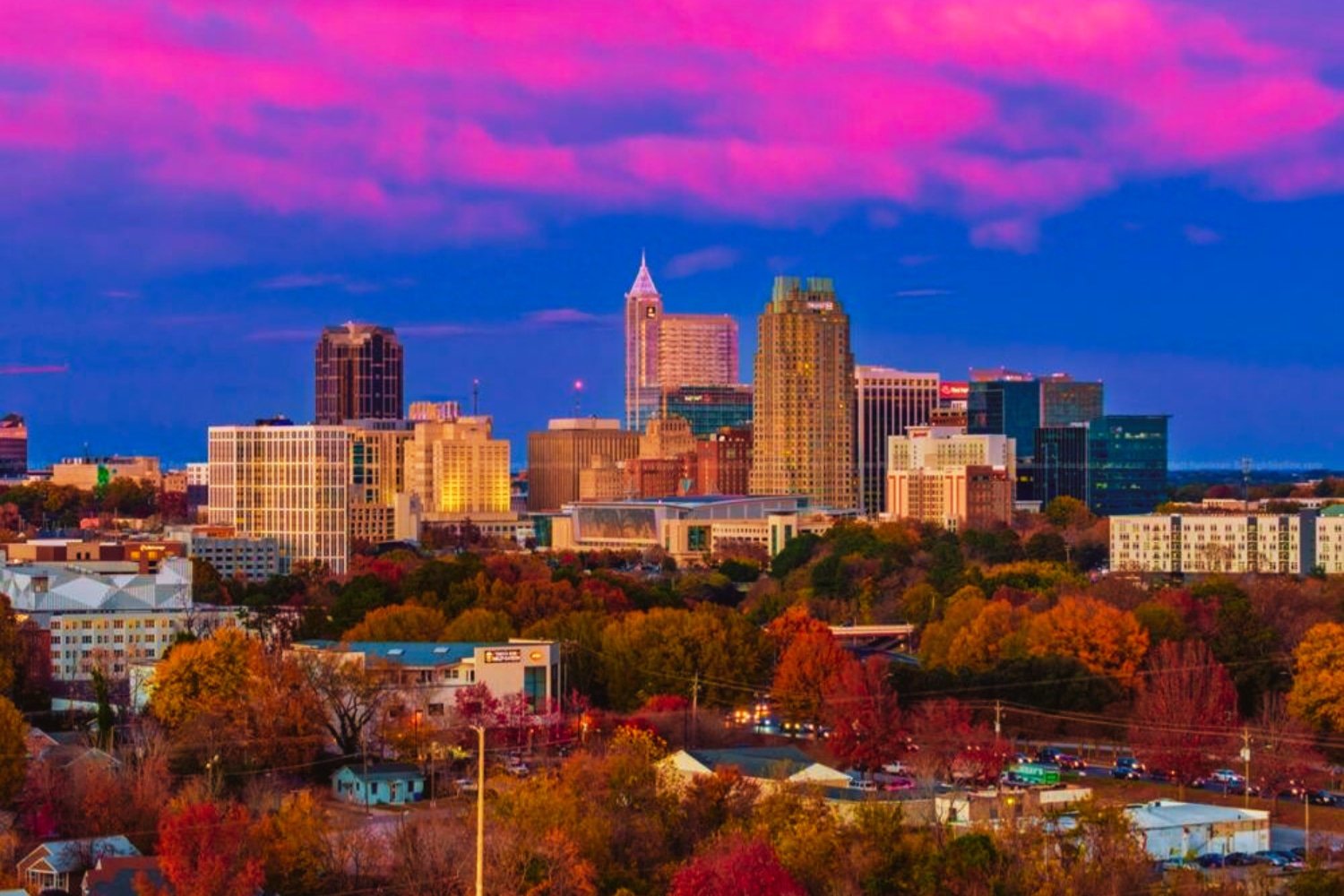
Raleigh, North Carolina skyline at sunset showcasing modern apartment growth and real estate development, highlighting the city’s rapid expansion and rising private equity ownership in multifamily housing.

Photo by Matt Robinson, RaleighSkyline.com, Š 2024

How corporate landlords quietly took over your rent check while you were just trying to survive the market.

Let’s start with the quiet part no one likes to say out loud: Raleigh isn’t just growing, it’s being bought.

Over the past few years, while we were all doom scrolling interest rates and chasing down inspection reports, a new kind of landlord slipped in through the side door: private equity.’

These aren’t your local property owners with one duplex and a dream. These are investment firms with names that sound like pharmaceutical side effects. Cortland Partners. Greystar. Invitation Homes. They’ve got billion-dollar budgets, zero attachment to community, and the emotional range of an Excel spreadsheet.

And now they own roughly 35% of Raleigh’s apartments. That’s not a typo. One in three multifamily units in this city are owned by Wall Street.

The Great Raleigh Power Grab

If you rent an apartment anywhere from Glenwood South to North Hills, there’s a decent chance your landlord isn’t local. It’s an investment fund that also owns property in Phoenix, Tampa, and maybe a retirement home in Singapore.

The Private Equity Stakeholder Project recently ranked Raleigh #1 in the nation for the highest percentage of apartments owned by private equity firms.

Atlanta, Charlotte, Austin - all behind us. Yay, I guess. We’re number one in being someone else’s passive income.

Here’s how it works:
Private equity groups raise piles of money from investors like pension funds, endowments, and wealthy clients. They buy entire apartment communities in bulk, rebrand them with names like “The Bailey at Peace” or “Cortland Glenwood South,” and crank up rents under the banner of “modernization.”

Then they add “optimization fees” - parking, pets, trash valet, admin, “amenity maintenance,” whatever. The point isn’t to build community. It’s to squeeze return.

The Raleigh Math Problem

Let’s do the rough math. Raleigh’s got about 118,000 apartment units. Roughly 41,000 are owned by private equity. That means tens of thousands of renters are now paying rent to companies who don’t even have a local office.

Meanwhile, wages? Still lagging behind. Median income’s up maybe 6–8% over the last couple years. Rents? Try 20–25%.

If you’re wondering why it feels harder to get ahead even when you’re “doing okay,” that’s why. You’re not crazy. The math is just rigged.

Line graph showing steady upward growth over time, illustrating increasing performance or results across multiple periods.

Line graph showing steady growth of private equity ownership in Raleigh apartments from 2015 to 2025, rising from 9% to 34.8%. Data highlights how investment firms gradually took control of the local rental market.

What’s wild is how quietly it happened. Back in 2015, fewer than 10% of Raleigh’s apartments were owned by private equity. Nobody blinked. Fast forward to 2025, and they control more than a third of the market. It didn’t happen overnight - it happened while everyone was distracted by bidding wars and mortgage rates.

What This Looks Like In Real Life

Rents jump with no real reason.

Maintenance requests vanish into the abyss of an online portal.

Tenants get hit with $250 “lease renewal fees” - for what, exactly?

Apartments that once cost $1,200 are suddenly $1,700 because a hedge fund spreadsheet said “the market can bear it.”

The worst part? No one’s accountable. You can’t walk into the office of “Raleigh Multifamily Holdings LLC” and talk to the decision-maker. They’re a P.O. box connected to a Delaware corporation owned by a Cayman trust that reports to a fund manager who’s never been to North Carolina.

You think you’re arguing with a property manager. You’re actually arguing with Wall Street.

But Wait, They’ll Say “We’re Providing Housing”

Sure. And fast-food chains technically “provide meals.” Private equity will argue that without them, no new housing gets built. But that’s a half-truth. They mostly buy existing properties, not build new ones.

And when they do build, it’s luxury units. “Luxury” meaning the rent starts higher than a mortgage on a starter home.

Even some finance insiders admit the game. They treat housing like a stock — something to flip, not live in.

Raleigh didn’t get more affordable thanks to these firms. It got more financialized.

What Raleigh Could Do (If Anyone’s Listening)

We can’t regulate greed out of existence, but we can stop pretending it’s progress.

Here’s what local leaders could do right now:

  • Require ownership transparency. Every landlord entity must disclose its true owner.

  • Enforce limits on rent hikes and junk fees.

  • Offer tax breaks to local landlords and small investors who actually live here.

  • Incentivize new affordable multifamily construction.

  • Strengthen tenant protection laws, because North Carolina’s current ones are about as sturdy as wet paper towels

Cities like Minneapolis, Boston, and Portland have started addressing this exact issue. Raleigh can too, but only if people make noise.

The Graph (The Moment Of Rage)

Bar chart comparing real estate marketing metrics across multiple categories to show relative performance.

Raleigh leads the nation in private equity apartment ownership, with 34.8% of units held by investment firms according to 2025 housing data.

Why This Story Matters

This isn’t a housing market issue. It’s a power issue. When homes become investment vehicles instead of places to live, the community loses control.

You can’t build trust in a city when most of it’s owned by entities that don’t even live here.

It’s time to stop treating housing like a stock ticker and start treating it like infrastructure.

Because right now, Wall Street doesn’t just own your rent check. It owns your neighborhood’s future.

Written by Emily Wyatt
Founder, Real Estate Concierge Services Co - helping realtors and communities reclaim authenticity, visibility, and sanity in an industry that’s lost its damn mind.

Read More
Emily Wyatt Emily Wyatt

Your Instagram Bio Makeover: Fix It in 10 Minutes or Less

Realtors - your Instagram bio is costing you clients! Here's how to fix it in 10 minites.

Here’s the truth: my own Instagram bio hasn’t always been perfect. In fact, it’s been… meh. But that’s exactly why I know how big of a deal it is when you get it wrong.

Most Realtors treat their Instagram bio like an afterthought. They put their name, their brokerage, maybe an award, toss in a couple emojis, and call it a day. But here’s the kicker: your bio is prime real estate. It’s often the first thing someone sees when they land on your profile, and if it’s confusing, bland, or too “me-focused,” you’ve already lost them.

And this isn’t theory — I’ve watched agents lose leads because their bio didn’t make it crystal clear who they help, where they work, or why anyone should care.

Why Your Bio Matters More Than You Think

Your bio has one job: get people to stop scrolling and instantly know why they should stick around.

Nobody cares if you’re a “multi-million-dollar producer” or “#realtorlife.” They care about whether you can solve their problem and if they can trust you.

Ask yourself: if a total stranger landed on your Instagram, could they answer these three questions in 3 seconds?

  1. Who do you help?

  2. Where do you work?

  3. How can they take the next step with you?

If not, your bio is costing you clients. Period.

The 3-Second Test

Here’s a quick reality check:
Hand your phone to someone who doesn’t know you that well. Give them three seconds to look at your Instagram bio. Then ask:

👉 “What do I do and how do I help people?”

If they hesitate, guess wrong, or can’t answer confidently, it’s time for a bio makeover.

The Framework That Works

You don’t need to overcomplicate this. Here’s a simple structure I share with my clients (and yes, it works every time):

1. Who you help
Be specific. “Helping first-time buyers in Charleston” beats “Trusted Realtor.”

2. What makes you different
Add one line that shows your edge. Example: “Turning listings into lead machines” or “The agent who actually answers the phone.”

3. Where you work
Never assume people know. Put your city/market in your bio—always.

4. Call-to-action (CTA)
Tell them exactly what to do next: “📲 DM me ‘Keys’ to start your home search” or “⬇️ Book your free consult.”

Real-World Examples

Here’s the difference between a weak bio and a strong one:

❌ “Licensed Realtor with XYZ Brokerage. Serving buyers and sellers. Passionate about helping clients.”

✅ “Helping Raleigh families buy + sell with confidence 🏡 | Negotiator, not just a tour guide | DM me ‘List’ to grab my free seller guide.”

See the difference? One sounds like a resume. The other sounds like a human who can actually help.

Quick Wins (You Can Do These Today)

  • Add your market name — don’t assume people know where you’re based.

  • Cut the fluff — ditch lines like “passionate about real estate.” (Nobody’s putting “hates people, avoids phone calls” in their bio.)

  • Sprinkle in personality — one or two emojis max. Not a full parade.

  • Use your link wisely — link to something useful (Calendly, a lead magnet, or a simple link hub).

The Bottom Line

Your Instagram bio is free advertising space. And yet, Realtors will spend thousands on mailers, headshots, and open house snacks—but ignore the one place where most of their leads actually start.

This doesn’t need to be perfect (mine changes all the time). But it does need to be clear, client-focused, and confidence-building.

Give yourself 10 minutes today to rewrite your bio using the framework above. The next time a potential client lands on your page, they’ll know exactly who you are and why you’re the Realtor to call.


👉 Want me to take a peek at your Instagram bio and give you feedback? DM me on Instagram and I’ll send you my unfiltered take (the kind of advice you’d normally only get from a coach who charges $$$).

Read More
Emily Wyatt Emily Wyatt

The Power of Service-Based Differentiation for Realtors

In today’s frozen market, the agents who stand out aren’t lowering commissions—they’re elevating service. Here’s how to win listings when everyone else is struggling.

The Market Is Slowing—But You Don’t Have To

If you’ve been feeling like the market has been stuck in slow motion, you’re not imagining it. Mortgage rates are hovering near 7%, affordability is strained, and many sellers are clinging to low-interest “golden handcuff” mortgages.

For Realtors, that means more coffee meetings, more “just checking in” calls… and fewer signed contracts.

But while most agents are stuck blaming the market, top performers are doing something different. They’re not trying to win by undercutting commission or printing bigger postcards. They’re winning with service-based differentiation—crafting a client experience so valuable that homeowners can’t imagine hiring anyone else.

What Is Service-Based Differentiation for Realtors?

Service-based differentiation is all about making your business incomparable. You don’t just market yourself as a Realtor—you market yourself as a full-service real estate solution.

That means going beyond MLS listings and open houses by providing high-touch, high-value offerings like:

  • Professional staging and pre-listing preparation

  • A curated vendor network (contractors, landscapers, cleaners)

  • Concierge-level marketing, including luxury photography, video, and smart TV listing placement

  • Detailed showing feedback reports for sellers

  • Thoughtful post-closing client follow-up

These aren’t “extras”—they’re your competitive advantage.

Why Service-Based Differentiation Works in a Slow Market

When the housing market cools, sellers become choosier. They want an agent who earns their commission through proactive marketing and visible effort.

Offering a concierge-style approach signals:

  • Professionalism: You run a streamlined, polished operation.

  • Commitment: You’re personally invested in their success before the first showing.

  • Value: You provide tangible benefits that outshine competitors.

In other words, it positions you as a partner—not just a salesperson.

4 Steps to Start Differentiating Your Real Estate Services Today

1. Create a Signature Service Menu
List every client-facing service you offer today. Then add 3–5 new high-value services you could implement with minimal cost or effort—like vendor introductions, pre-listing walkthroughs, or boosted social ads.

2. Brand Your Process
Package your service offering under a memorable name, like The [Your Name] Signature Selling System or The Concierge Listing Experience.

3. Showcase It Everywhere
Make your services the story in your listing presentations, website copy, and social media—don’t hide them as an afterthought.

4. Leverage Strategic Partnerships
Work with a real estate concierge service (that’s where I come in) to expand your offerings instantly without the hassle of managing each vendor yourself.

The Bottom Line for Realtors

In a frozen market, service-based differentiation isn’t optional—it’s essential. By delivering a client experience that’s polished, proactive, and high-impact, you’ll stop competing on price and start competing on value. And that’s the kind of competition you can win every time.

Read More