The 90-Day Content Calendar for Real Estate Agents: Stop Winging It, Start Converting

RECSC blog on Stop Winging Your Content. Social Media Content Calendar for Real Estate Agents
Let me describe a pattern I see with almost every agent I work with.

Monday morning. You know you should post something. You open Instagram, stare at the blank caption box for 12 minutes, post a photo of a house with "Just listed! DM me for details!" and call it content marketing.

By Wednesday, you have forgotten to post anything else. By Friday, you feel guilty about it. By the following Monday, the cycle starts over.

This is not a discipline problem. It is a systems problem. And it is costing you leads every single week.

Why "Post When You Feel Inspired" Does Not Work

Inspiration is not a strategy. The agents who are growing their audience, generating DMs, and converting followers into clients are not more creative than you. They are more consistent — and they are consistent because they have a system.

The difference between an agent who posts sporadically and an agent who shows up every day across multiple platforms comes down to one thing: a content calendar that tells them exactly what to post, where to post it, and when.

Not a vague plan. Not a Pinterest board of content ideas. A week-by-week, platform-by-platform system that takes the thinking out of it.

The Problem With Most Content Calendars

Here is why the generic social media calendars you have downloaded before did not stick: they were not built for real estate. They tell you to post on "National Coffee Day" and "Motivational Monday" — content that gets zero engagement and generates zero leads.

A real estate content calendar needs to do three things. First, it needs to balance value and conversion so your audience does not feel sold to on every post. Second, it needs to account for the fact that you are posting across 5-8 platforms with different formats and audiences. Third, it needs to be executable in under 3 hours a week, because you have houses to sell.

The 4-Pillar Framework

The system I built for my clients is based on four content pillars, and the ratio between them is what makes it work.

Authority content makes up about 30% of what you post. This is the content that positions you as the expert — market updates, neighborhood guides, process explainers, myth-busting. It is the content that makes someone think "this agent actually knows what they are talking about."

Social proof accounts for roughly 25%. These are your client wins, testimonials, just-sold stories, and case studies. Not the boring "Another happy client!" posts — the real stories with real details that make people trust you.

Connection content is another 25%. This is what makes you human. Behind-the-scenes moments, personal stories, day-in-the-life content, community involvement. People hire people they feel like they know, and this pillar builds that relationship.

Conversion content rounds it out at 20%. These are your CTAs, lead magnets, open house promos, and direct asks. The reason this is only 20% is because the other three pillars do the heavy lifting — by the time someone sees your conversion post, they already trust you.

Most agents post 80% conversion content and wonder why nobody engages. Flip the ratio. Lead with value. The conversions follow.

What a Real Week Looks Like

Here is a simplified version of what Week 1 looks like in the full calendar:

Monday is an authority day — you film a 60-second TikTok or Reel covering something like "3 things nobody tells you about buying in Raleigh right now." Tuesday is a LinkedIn text post with a market update and your take on one surprising stat. Wednesday is a connection piece — a day-in-the-life video that shows what being an agent actually looks like. Thursday is a neighborhood spotlight on Facebook and Google Business Profile. Friday is a social proof story about a recent client win. Saturday is an Instagram Story poll to drive engagement. Sunday is your weekly email newsletter.

That is seven touchpoints across five platforms, and the entire week can be batched in about two hours on Monday morning. Film 3-4 videos, write the captions, schedule everything, and you are done until the following Monday.

The Part Most Agents Miss: Repurposing

One piece of content should become at least five. A single 10-minute YouTube video can be clipped into 3 TikToks, summarized into a LinkedIn post, transcribed into a blog article, condensed into a newsletter section, and posted as a GBP update. That is 8 pieces of content from one filming session.

The agents who look like they are everywhere are not working 10x harder than you. They are repurposing 10x smarter.

The 2.5-Hour Weekly Workflow

The full calendar includes a weekly execution workflow that breaks down exactly how to get everything done without burning out. Sunday is 30 minutes of planning. Monday is 60 minutes of batch filming. Tuesday and Wednesday are 15 minutes each for writing and scheduling. Thursday is 15 minutes for reviewing last week's analytics. Friday through Sunday, everything is already scheduled and running.

Total time: under 2.5 hours per week. That is less time than most agents spend scrolling through other people's content trying to figure out what to post.

Get the Full 90-Day Calendar

The complete Content Marketing Calendar Builder is available inside the Agent Marketing Hub. It includes the full 4-pillar framework with exact ratios, platform-specific posting cadences for 8 platforms, a week-by-week Month 1 calendar you can follow day by day, 60+ content ideas organized by pillar so you never run out of topics, a repurposing matrix that turns one piece of content into eight, quarterly planning session instructions, and tracking metrics so you know what is actually working.

It is available for Growth Plan members and it is the kind of system you set up once and run for the rest of your career.

Access the Full Content Calendar Builder →

Emily Wyatt is the founder of Real Estate Concierge Services Company LLC, a boutique marketing operation for real estate agents and brokerages across Raleigh and Lake Norman. She builds the visibility layer that compounds.

Read More

Video SEO for Realtors: Why Your Videos Are Invisible (and How to Fix It)

real estate concierge services company image on Your Videos Are Invisible for real estate agents
You filmed the neighborhood tour. You talked about the schools, the restaurants, the vibe. You uploaded it to YouTube, wrote "Check out this awesome area!" in the description, and moved on with your day.

Three weeks later, it has 47 views. Most of them are you.

Here is the thing — the video itself might be great. The problem is not your content. The problem is that nobody can find it.

Google now shows video results in 62% of search queries. YouTube is the second-largest search engine on the planet. And AI tools like ChatGPT and Perplexity are pulling video content into their answers when someone asks "Who is the best real estate agent in Raleigh?" or "What should I know about moving to Lake Norman?"

If your videos are not optimized for all three of those surfaces, you are invisible in all three. And that is exactly where most agents are right now — creating content that disappears the moment they hit publish.

The Gap Between Agents Who Get Found and Agents Who Get Forgotten

The difference is not talent, equipment, or editing software. It is Video SEO — the system for making every video you publish findable, citable, and rankable across YouTube, Google search, AI-generated answers, and social platforms.

Most agents have never heard of it. The ones who figure it out first will own their local market.

Here is a quick look at what separates the two approaches:

The agent who posts and hopes uploads to YouTube with a vague title, writes two sentences in the description, skips tags entirely, and never touches the video again. It sits on page 6 of YouTube search results and never appears in Google.

The agent who optimizes titles the video with a keyword buyers are actually searching ("Moving to North Hills Raleigh — What You Need to Know in 2026"), writes a 300-word description with timestamps, adds schema markup to their website, embeds the video on a dedicated page with a transcript, and clips it for TikTok, Reels, and Google Business Profile. That video shows up in Google video carousels, gets cited by AI search tools, and generates leads on autopilot.

Same effort to film. Wildly different results.

The 5 Pillars (A Quick Preview)

The full system covers five pillars that work together to make your videos rank everywhere that matters.

Pillar 1: Video Keyword Research. This is different from traditional blog SEO. You need to find terms where Google actually shows video results — not just any keyword, but keywords with "video intent." There is a simple test for this, and it takes about 10 seconds per keyword.

Pillar 2: YouTube Optimization. Your title, description, tags, and thumbnail are doing most of the heavy lifting. The description alone should be 250+ words — not the two-sentence throwaway most agents write. There is a template for this that makes it almost effortless.

Pillar 3: On-Page Video SEO. This is the step almost every agent skips. Embedding your video on your website with proper schema markup (called VideoObject) tells Google exactly what your video is about and dramatically increases your chances of appearing in video carousels and rich results.

Pillar 4: AI Search Optimization. AI tools read transcripts and structured content. If your videos are not formatted for AI consumption — with clear, quotable statements, specific data points, and FAQ content on your website — you are missing the fastest-growing search channel in real estate.

Pillar 5: Cross-Platform Distribution. One video should live in at least five places. YouTube, your website, TikTok, Reels, GBP, LinkedIn, Facebook, and Pinterest. There is a repurposing workflow that turns one 10-minute video into 8 pieces of content across every platform that matters.

One Stat That Should Change How You Think About Video

Homebuyers search for neighborhoods on YouTube before they ever contact an agent. "Best neighborhoods in Raleigh" gets 2,400+ monthly searches. "Moving to Raleigh NC" gets 1,900. "Cost of living in Raleigh NC" gets 1,600.

Those are people actively researching your market — right now — and they are watching whoever shows up first. If that is not you, it is your competitor.

Get the Full System

I built a complete Video SEO guide inside the Agent Marketing Hub that breaks down all five pillars with templates, checklists, keyword research frameworks, schema markup you can copy and paste, and a 30-day sprint to get your existing videos ranking.

It is available for All Access members and it is the kind of resource you implement once and benefit from for years.

Access the Full Video SEO Guide →

Emily Wyatt is the founder of Real Estate Concierge Services Company LLC, a boutique marketing operation for real estate agents and brokerages across Raleigh and Lake Norman. She builds the visibility layer that compounds.

Read More

How to Optimize Your Google Business Profile as a Real Estate Agent

Google Business Profile optimization dashboard for real estate agents
By Emily Wyatt, Fractional Marketing Partner for Real Estate Agents

Most real estate agents think they have a marketing problem. If you still know it as Google My Business, same tool, new name — Google rebranded it to Google Business Profile in 2022, but the strategy behind it has evolved even more than the name. What they actually have is a visibility problem. You can post on Instagram every day, pay for leads, and have a beautiful website, but if someone Googles “real estate agent near me” and you don’t show up, you are functionally invisible.

Your Google Business Profile (GBP) is the single most powerful tool you have for capturing local, high-intent search traffic. It’s not a digital business card; it’s a local search engine that works for you 24/7. Optimizing it correctly is the difference between getting calls from motivated locals and being completely outranked by the agent down the street.

This is the definitive, step-by-step guide to optimizing your Google Business Profile for real estate in 2026. No fluff, no generic advice—just the strategic process I use to make my clients the most findable agents in their market.

Why Your Google Business Profile Matters More Than Your Website Right Now

Social media builds familiarity, but Google captures intent. Someone scrolling Instagram might like your post. Someone Googling “realtor in Raleigh NC” is ready to act. This is why Google traffic converts differently and why agents who dominate local search don’t feel the same pressure to constantly chase leads.

Your Google Business Profile is where trust is decided before a conversation ever happens. It’s your digital storefront, review hub, and service menu all in one, and it’s the first impression most prospects will have of your business.

Step 1: Claim and Verify Your Profile

Before you can optimize, you must have control. If you haven’t already, go to google.com/business to claim or create your profile. Verification is typically done via a postcard sent to your business address to confirm your location, though Google sometimes offers phone or email verification. This step is non-negotiable.

Step 2: Choose the Right Primary and Secondary Categories

This is one of the most critical ranking factors and where most agents make their first mistake. Your Primary Category must be Real Estate Agent. Not “Real Estate Agency” (unless you are a brokerage), not “Real Estate,” but the specific practitioner category.

Where you gain an edge is in your Secondary Categories. These tell Google about the full scope of your expertise. Add every relevant category, such as:

•Real Estate Agency

•Real Estate Consultant

•Real Estate Appraiser

•Commercial Real Estate Agency

•Real Estate Rental Agency

•Property Management Company

Choosing the right categories is a direct signal to Google about which searches your profile is qualified to rank for. Don’t skip this.

Step 3: Write a Keyword-Rich Business Description

Your business description is 750 characters of prime SEO real estate. Do not waste it on fluffy brand statements. Write a clear, concise, and keyword-rich summary of who you help, where you help them, and what you specialize in.

Use this template:

[Your Name/Team Name] is a [primary specialty, e.g., top-producing real estate agent] serving [City, State] and the surrounding [Region, e.g., Triangle area]. We specialize in [niche 1, e.g., helping first-time homebuyers], [niche 2, e.g., luxury listings], and [niche 3, e.g., relocation services to Raleigh]. With over [X] years of experience and a commitment to [your value proposition, e.g., data-driven marketing and client education], we guide our clients through every step of the buying and selling process. Contact us for a no-pressure consultation.

This structure tells Google your location, your specialties, and your value, all while using the natural language your clients use in search.

Step 4: Build Out Your Services and Products Sections

This is the area most agents ignore, and it’s a massive missed opportunity. It’s how you turn your profile from a simple listing into an interactive service menu.

•Services Section: Add every single service you offer with a detailed description. Don’t just list “Buyer Representation.” Create entries for “First-Time Homebuyer Consultation,” “Seller Listing Services,” “Relocation Services,” “Local Market Analysis,” and “Luxury Property Marketing.” For each service, write a 300-character description explaining the value and what’s included.

•Products Section: This is not just for e-commerce. Use the Products section to feature your listings, lead magnets, or core services. Create a “product” for each of your current listings with high-quality photos and a link to the listing page. Create another “product” for your “Free Relocation Guide” that links to a landing page. This gives users a direct, visual path to your most valuable content.

Step 5: Set Up Your Service Areas Strategically

Your service areas tell Google your geographic footprint. Be specific. Instead of just listing “Raleigh, NC,” add the specific neighborhoods you specialize in (e.g., “North Hills,” “Oakwood,” “Brier Creek”). If you serve multiple towns, list them all. The more specific your service areas, the more likely you are to show up in hyperlocal searches like “realtor in North Hills Raleigh.”

Step 6: Add and Maintain High-Quality Photos

Photos are a trust signal and a ranking factor. A profile with a robust, frequently updated photo library will always outperform a barren one. Your goal is to have at least 10-15 high-quality images across these categories:

•Profile Photo: A professional, high-resolution headshot.

•Cover Photo: A branded image or a stunning shot of a local landmark or property.

•Listing Photos: Interior and exterior shots of your best current or sold properties.

•Team Photos: Professional shots of you and your team.

•Community Photos: Pictures you’ve taken of local parks, restaurants, and neighborhoods to establish local authority.

Name your image files with relevant keywords before uploading (e.g., raleigh-nc-real-estate-agent-emily-wyatt.jpg).

Step 7: Create a Weekly Google Post Strategy

Google Posts are mini-blog posts that appear directly on your profile. They expire every seven days, so consistency is key. A weekly posting cadence keeps your profile active, which Google rewards. Use these post types:

•What’s New: Share market updates, new blog posts, or community news.

•Offers: Promote a free home valuation, a new lead magnet, or a consultation offer.

•Events: Announce open houses, webinars, or community events you’re hosting.

Rotate through these themes weekly to keep your content fresh and engaging.

Step 8: Build a Review Strategy That Compounds

Reviews are the engine of local SEO. They provide social proof and are a top-three ranking factor. Your strategy should have two parts:

1.Acquisition: The best time to ask for a review is right after a successful closing. Send a direct link to your GBP review form in your follow-up email. Make it as easy as possible for happy clients to share their experience.

2.Response: Respond to every single review—positive and negative. For positive reviews, thank the client by name and mention a specific detail from your work together. For negative reviews, respond professionally, take the conversation offline, and show that you are committed to resolving issues. Your responses are visible to all future prospects.

Step 9: Use the Q&A Section Proactively

Don’t wait for people to ask questions; load the Q&A section yourself with the questions you get asked most often. This is your chance to control the narrative and overcome objections before they even arise.

Click “Ask a question” on your own profile and then answer it from your business account. Add 5-10 of your most frequently asked questions, such as:

•“What are your commission rates?”

•“How do you market your listings?”

•“Do you work with first-time homebuyers?”

•“What areas do you serve?”

Step 10: Align Your GBP with Your Website and Citations

Consistency is currency for Google. Your business name, address, and phone number (NAP) must be identical across your Google Business Profile, your website, and other online directories (like Yelp, Zillow, Realtor.com). Any inconsistency erodes Google’s trust in your data and can harm your rankings.

Ensure the website URL on your GBP links to your homepage and that your homepage clearly displays your NAP information in the footer.

Step 11: Track What Is Working with GBP Insights

Your GBP Insights dashboard is a goldmine of data. Pay attention to:

•How users searched for your business: Are they finding you through branded search (your name) or discovery search (e.g., “realtor near me”)? An increase in discovery searches means your optimization is working.

•Where users view your business on Google: Maps or Search?

•User actions: Are they calling you, visiting your website, or requesting directions? This tells you what your most valuable conversion actions are.

Check your insights monthly to understand what’s working and where to focus your efforts.

What Most Agents Get Wrong (And What to Fix First)

Having audited hundreds of real estate agent profiles, I see the same mistakes over and over:

1.Incorrect Primary Category: Choosing “Real Estate Agency” instead of “Real Estate Agent.”

2.Empty Services Section: Failing to detail their service offerings.

3.No Posting Strategy: Letting the profile sit dormant for months.

4.Ignoring Reviews: Not responding to reviews, leaving social proof on the table.

5.Generic Description: Wasting the 750-character description on fluff.

Fixing these five things will put you ahead of 90% of your competition.

When to DIY vs. When to Hire a GBP Expert

You can and should handle the basics of your profile yourself—responding to reviews, uploading photos, and creating weekly posts are all manageable tasks. However, the initial strategic setup and deep optimization—category selection, service build-out, keyword strategy, and citation alignment—is where professional expertise makes a significant difference.

If your profile is set up correctly, you can maintain it in about 30 minutes a week. If you’re not sure whether your foundation is solid, that’s when an audit is the best investment you can make.

Want a personalized review of your Google Business Profile? My Google Visibility Audit provides a prioritized action plan to fix what’s holding your rankings back. It’s a one-time fee, and if you move forward with my optimization services, the audit cost is credited back to you.

Frequently Asked Questions

(H3) How often should a real estate agent post on Google Business Profile?

A real estate agent should post on their Google Business Profile at least once a week. Google Posts expire every seven days, so a weekly cadence ensures your profile remains active, which is a positive signal to Google’s ranking algorithm. A consistent strategy involves rotating through post types like market updates, new listings, open house announcements, and real estate tips.

What is the best primary category for a Realtor on Google Business Profile?

The best and correct primary category for an individual Realtor on Google Business Profile is “Real Estate Agent.” If you are a brokerage, you should use “Real Estate Agency.” Using the correct practitioner-level category is critical for showing up in the right local searches.

Do Google Business Profile reviews affect local search rankings?

Yes, absolutely. The quantity, quality (star rating), and frequency of your Google reviews are among the most important ranking factors for local search. Google uses reviews as a strong signal of a business’s authority and trustworthiness. Furthermore, responding to reviews also appears to be a positive ranking signal.

Can I optimize my Google Business Profile myself or do I need to hire someone?

You can perform many basic optimization tasks yourself, such as completing your profile information, uploading photos, creating weekly posts, and responding to reviews. However, strategic optimization—including advanced category selection, building out services and products, local keyword strategy, and ensuring NAP consistency across all online directories—often requires expertise. A good approach is to hire a professional for an initial audit and strategic setup, then handle the weekly maintenance yourself.

How long does it take to see results from Google Business Profile optimization?

While some changes can have an immediate impact (like correcting an inaccurate business name or phone number), most significant results from Google Business Profile optimization take time to materialize. You can typically expect to see noticeable movement in your local search rankings and an increase in profile views and actions (calls, website clicks) within 30 to 90 days of implementing a consistent optimization and posting strategy.

Read More
Marketing Strategy, SEO & Visibility Emily Wyatt Marketing Strategy, SEO & Visibility Emily Wyatt

Realtor Visibility Sprint: GBP, Reviews, Follow-Up Scripts

Most Realtors are doing “all the things” and still not getting consistent inbound leads. This 7-day visibility sprint shows you exactly what to fix on your Google Business Profile, how to ask for reviews that help you rank, and the follow-up script that turns open house conversations into appointments.

The Realtor Visibility Sprint: 7 Days to Fix Your Google Presence (and Convert More Leads)

If you are posting consistently, networking, hosting open houses, and still not getting predictable inbound leads, you do not have a work ethic problem.

You have a visibility problem.

In 2026, effort does not equal opportunity if people cannot find you at the exact moment they are searching. And that moment is usually on Google.

This post is a step-by-step sprint you can run in under an hour a day. It is designed to do two things:

  1. Get you found more often in local search

  2. Convert more of the leads you are already meeting (without chasing)

If you want the quick version: optimize your Google Business Profile, collect reviews that include location and outcomes, and stop sending follow-ups that end the conversation.

Let’s get you set up.

What “Visibility” Actually Means for Realtors

Visibility is not “posting more.” Visibility is being discoverable when intent is high.

Examples of high-intent searches:

  • “Realtor near me”

  • “moving to [city]”

  • “best neighborhoods in [city]”

  • “sell my house in [city]”

  • “[city] waterfront homes agent” (Lake Norman friends, I’m looking at you)

Google, and increasingly AI search results, rely on consistent business signals:

  • accurate business info

  • strong reviews with context

  • clear services

  • locally relevant content

If your online presence is scattered or vague, Google cannot confidently put you in front of the right people.

The 7 Day Visibility Sprint

Do these in order. Each day builds on the last.

Day 1: GBP Foundation

Open your Google Business Profile and check these three things:

1) Primary category
Be specific. “Marketing consultant” and “real estate consultant” are not the same. Your category impacts what you show up for.

2) Services
Fill out your services list with what you want to get hired for. Not what sounds fancy.

Examples:

  • Real estate marketing consulting

  • Real estate lead generation support

  • Google Business Profile optimization

  • Listing launch marketing

  • Relocation marketing campaigns

  • CRM setup and lead nurturing (HubSpot)

3) Service areas
Set service areas based on where you want business, not where you happen to be sitting when you create the profile.

Quick win: add your top 5 target areas and keep them consistent across your website and socials.

Day 2: Fix Your Business Description (This is a rankings and conversion lever)

Most GBP descriptions are either bland or stuffed with keywords. Both are a miss.

Use this structure:

Line 1: Who you help + where
Example: “Outsourced Operations and Marketing for Realtors in Raleigh and Lake Norman.”

Line 2: What you actually do
Example: “I help agents get found on Google, convert leads through follow-up systems, and turn listings into content that drives calls.”

Line 3: Proof or differentiator
Example: “Boutique, hands-on support. No fluff. Clear deliverables.”

Line 4: CTA
Example: “Message me for a quick visibility audit.”

Day 3: Photos That Build Trust and Signal Activity

Google rewards fresh activity. People reward proof.

Upload 10 new photos this week:

  • a clean headshot

  • you working, laptop, on-site, meeting, content creation

  • screenshots of results (blur any sensitive info)

  • a simple branded graphic (checklist, script, framework)

  • local photos (Raleigh, Lake Norman landmarks, events, streetscapes)

Tip: upload 1 to 2 photos weekly going forward. Consistency wins.

Day 4: The Review Sprint (Reviews that rank are not generic)

“Highly recommend” reviews are nice, but they do not help you rank like reviews with context.

Ask for reviews that include:

  • location (city, neighborhood)

  • service (buying, selling, relocation, marketing support)

  • outcome (what improved, what result happened)

Copy/paste review ask:
“If you’re comfortable, could you mention the area you’re in, what I helped you with, and the result? That helps local agents find me when they need the same support.”

Five prompts to make it easy for them:

  1. Mention the city or neighborhood

  2. Mention the service (GBP, content, CRM, listing launch, etc.)

  3. Share the problem you were trying to solve

  4. Share what felt different about working together

  5. Share the result

Day 5: Build One Website Page That Actually Converts

Pretty websites do not convert if they do not answer the right questions.

Minimum viable “conversion” setup:

  • clear positioning

  • proof

  • next step

Create one page that targets a real, high-intent search:

Option A: “Google Business Profile Optimization for Realtors”
Include:

  • who it’s for

  • what’s included

  • common mistakes

  • timeline

  • CTA to book

Option B: “Relocation Marketing for Realtors”
Include:

  • what you build (guides, neighborhood content, visibility assets)

  • examples of deliverables

  • CTA

If you already have a services page, your job is to add one page that is laser-focused, not another general overview.

Day 6: Create a 3 Area Content Map (The simplest local authority play)

Pick 3 areas you want to own. Then write 3 pieces of content.

For each area:

  • Who it’s perfect for

  • Who should skip it

  • The tradeoff nobody says out loud

This is the kind of content that gets saved, shared, and ranked.

Day 7: Publish One “Start Here” Offer Post and Pin It

This is your lead-capture post. It should be simple and specific.

Example:
“If you’re a Realtor and your Google Business Profile is not producing calls, comment AUDIT and I’ll send you the top 3 fixes that will move the needle fast.”

Pin it on Facebook. Feature it on LinkedIn. Add it to your GBP as an Offer post.

Bonus: The Open House Follow-Up Script That Converts

Most agents send follow-ups that end the conversation.

Use a follow-up that asks one smart question:

Copy/paste:
“Hey [Name], thanks again for coming by today. Quick question: what’s the one thing you’re hoping your next move fixes or improves? More space, shorter commute, better schools, walkability, less maintenance, or something else? If you tell me that, I’ll send you 3 options that match, plus what you should watch for before you fall in love with the wrong house.”

Why it works:

  • it is about their life, not your schedule

  • it asks one easy question

  • it earns the right to send more value

If You Want Me to Check Your Visibility

I run a quick mini audit and send you:

  • 3 quick fixes

  • the 1 thing to change first

  • what to post for the next 2 weeks

Comment AUDIT or message me with your market.

FAQ

How long does GBP take to improve?
If you fix categories, services, description, and start consistent posting and reviews, you can see movement within weeks. Real stability comes from consistency.

Do I need to post daily on GBP?
No. Weekly is fine. Consistent is the point.

What matters more, website or GBP?
GBP usually drives the fastest local results. Your website supports conversions and longer-term ranking.

Are generic reviews still helpful?
Yes, but specific reviews help you rank and convert better.

:Book a Visibility Audit


Read More

Why Great Content Doesn’t Matter If No One Can Find You

Effort does not equal opportunity in 2026. You can work 80-hour weeks, follow every best practice, and create great content, but if you are not visible in Google and AI search results, it does not matter. This post breaks down the visibility stack realtors need now, from Google Business Profile and local SEO to AI-friendly website clarity, so the right people can actually find you.

Effort Does Not Equal Opportunity in 2026

How Realtors Actually Show Up in Google and AI Search Results

You can have the best content in the world, and it won’t matter if no one sees it. This is the part of marketing most real estate agents don’t want to hear, but need to:

Visibility comes before content quality.

Not “better captions.”

Not “posting more.”

Not “trying a new hook.”

If Google, AI tools, and search platforms don’t understand who you are, what you do, and where you operate, your content is invisible no matter how good it is.

Visibility Is the Prerequisite to Everything Else

When buyers and sellers search questions like:

“Best real estate agent in Raleigh”

“Relocation realtor near me”

“Who helps with buying a home in Lake Norman”

“How do I find a realtor for relocating to North Carolina”

They’re not scrolling Instagram hoping to stumble across you.

They’re asking Google.

And increasingly, they’re asking AI tools like ChatGPT.

If you don’t show up in those answers, you don’t exist at the moment of intent.

Why Most Realtors Think They’re Visible (But Aren’t)

Most agents assume they’re visible because:

They post consistently

They have a website

They show up on social media

They “rank” for their name

That’s not visibility. That’s presence.

Visibility means:

Google understands your expertise and location

AI can confidently reference you as an option

Your brand appears when non-branded questions are asked

If someone has to already know your name to find you, you’re not visible. You’re just searchable.

How Google and AI Decide Who Shows Up

Google and AI systems don’t reward effort. They reward clarity and consistency.

They look for:

Clear service definitions

Repeated, consistent language across platforms

Proof of local relevance

Structured explanations of what you do and who you help

This is why smaller, more focused brands often outrank larger agents who “do everything.”

The system needs to understand you easily.

The Three Pillars of Realtor Visibility

1. Entity Clarity (Who You Are)

Google and AI need to know:

Are you a real estate agent?

A relocation specialist?

A marketing consultant for realtors?

A local expert in a specific city?

If your website, bios, and profiles describe you differently everywhere, the system can’t confidently place you.

Clarity beats cleverness every time.

2. Local Authority (Where You Operate)

Visibility is always local first.

If you want to show up for Raleigh, Lake Norman, or any other market, you must:

Name those locations consistently

Create content tied to those areas

Optimize your Google Business Profile properly

Publish local relevance signals across platforms

General content without geographic context rarely ranks.

3. Consistent Execution (How Often You Reinforce It)

One blog post won’t fix visibility.

Systems trust repetition.

That means:

Publishing content that reinforces the same positioning

Answering the same core questions in multiple formats

Aligning your website, Google profile, and social content

This is why agents who “post less but say the same thing clearly” often win.

Why AI Visibility Is a New Layer (Not a Replacement)

AI tools don’t replace Google. They summarize it.

When ChatGPT answers a question, it’s pulling from:

  • Well-structured websites

  • Clear service explanations

  • Brands with consistent messaging

  • Sources that repeatedly explain the same ideas

If your site is vague, fragmented, or overly customized without structure, AI can’t reuse you.

This is why productized clarity matters, even for bespoke services.

What Realtors Should Focus On First (Not Content Ideas)

Before worrying about:

  • Reels

  • Hooks

  • Trends

  • Captions

You should lock in:

  • A clear description of what you do

  • A defined primary market

  • One or two core visibility goals

  • Systems that support follow-up and consistency

Content amplifies clarity.

It cannot replace it.

The Visibility Stack That Actually Works

For real estate agents who want to show up consistently, the order matters:

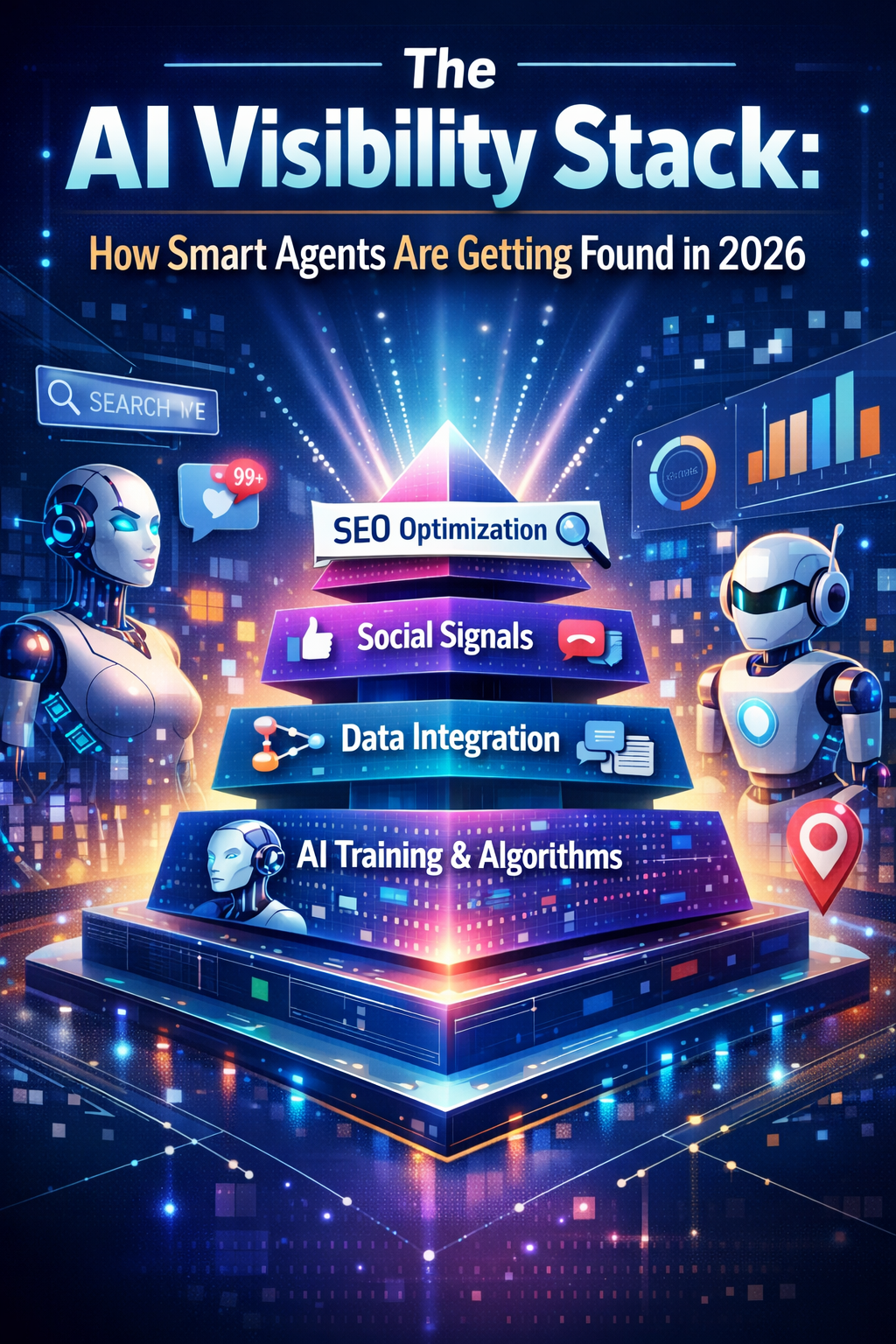
Google Business Profile optimization

Website clarity and structure

Local SEO signals

AI-readable explanations of services

Content that reinforces all of the above

Skipping steps creates noise, not reach.

The Hard Truth

You don’t need better content.

You need:

Clear positioning

Systems that reinforce it

Visibility infrastructure that works even when you’re not posting

When those are in place, content finally does its job.

Final Thought

The agents who win visibility aren’t the loudest or the most creative.

They’re the clearest.

And clarity is a system, not a post.

Want help fixing visibility before creating more content?

If you’re not showing up in Google, Maps, or AI answers in your market, the issue isn’t effort. It’s structure.

That’s fixable.

Read More

What Realtors Get Wrong About SEO (And Why It’s Costing You Listings)

Most Realtors are following outdated advice that quietly kills their visibility. This breakdown explains what actually works in local SEO today, why blogging and social media alone aren’t enough, and how weak infrastructure is costing agents listings without them realizing it.

What Realtors get wrong about SEO

Image of desk and the words What Realtors Get Wrong About SEO

What Realtors Get Wrong About SEO

Let’s clear something up.

SEO is not broken.
Google is not “too competitive.”
And your market is not the problem.

What is happening is that most Realtors are following outdated, incomplete, or flat out wrong advice about SEO. And it is quietly costing them visibility, leads, and listings.

If you have ever said “SEO doesn’t work for me,” this is probably why.

Mistake #1: Thinking Blogging Alone Equals SEO

This is the biggest misconception I see.

Agents are told:
“Just write blogs.”
“Content is king.”
“Post weekly and Google will reward you.”

Blogging helps. But blogging by itself does not equal SEO, especially for local businesses.

If your blog is not connected to:

  • Local intent

  • Your Google Business Profile

  • Clear services

  • Structured visibility signals

Then you are creating content that floats around the internet without a job.

Blogs do not rank businesses.
Systems do.

Mistake #2: Treating SEO Like a One Time Setup

Most agents approach SEO like a checklist.

Website done.
Google profile claimed.
Keywords added once.
Move on.

That is not how Google works anymore.

Google rewards:

  • Consistent activity

  • Ongoing updates

  • Fresh signals that confirm you are active and relevant

If your Google presence looks frozen in time, Google assumes your business might be too.

SEO is not a set it and forget it task.
It is an ongoing signal of legitimacy.

Mistake #3: Thinking SEO Is Just Keywords

Keywords matter, but they are not the whole picture.

What Google actually cares about is:

  • Who you serve

  • Where you serve them

  • What problem you solve

  • Whether people engage with your business

You can stuff keywords into a page all day long, but if your profile, website, and content do not clearly answer those questions, Google will not trust you enough to show you.

SEO today is about intent and clarity, not keyword gymnastics.

Mistake #4: Believing Social Media Replaces SEO

This one is costing agents the most money.

Social media builds awareness.
SEO captures demand.

Posting on Instagram does not help when someone searches “Realtor near me” at 10 p.m.
Your Google presence does.

Social content is rented attention.
Search visibility is owned real estate.

The strongest agents do not choose one or the other. They understand that each plays a different role.

Let’s clear something up.

SEO is not broken.
Google is not “too competitive.”
And your market is not the problem.

What is happening is that most Realtors are following outdated, incomplete, or flat out wrong advice about SEO. And it is quietly costing them visibility, leads, and listings.

If you have ever said “SEO doesn’t work for me,” this is probably why.

What Actually Works Right Now

Here is the part most people skip.

Modern local SEO works when:

  • Your Google Business Profile is active, complete, and accurate

  • Your services are clearly defined

  • You post consistently, even short updates

  • Your website supports local intent, not just branding

  • Your online presence sends the same message everywhere

This is not about tricks.
It is about making it easy for Google to understand and trust your business.

When that happens, visibility follows.

What You Should Do Next

If you are early in your business, start simple:

  • Clean up your Google Business Profile

  • Clarify your services

  • Post consistently

  • Stop chasing hacks

If you are already established and want clarity fast, you need a structured audit.

Not guesses.
Not generic advice.
A real breakdown of what is helping or hurting your visibility.

Final Thought

Most Realtors are not losing business because they are bad at marketing.
They are losing business because their visibility is fragile.

SEO is not magic.
It is infrastructure.

And if your infrastructure is weak, everything else has to work twice as hard.

Here is the part most people skip.

Modern local SEO works when:

  • Your Google Business Profile is active, complete, and accurate

  • Your services are clearly defined

  • You post consistently, even short updates

  • Your website supports local intent, not just branding

  • Your online presence sends the same message everywhere

This is not about tricks.
It is about making it easy for Google to understand and trust your business.

When that happens, visibility follows.

Want to Know If SEO Is Actually Working for You?

If your visibility feels inconsistent or unpredictable, guessing won’t fix it.

My Google Visibility Audit shows exactly:

  • What’s helping your local search presence

  • What’s holding you back

  • What to fix first for real results

No fluff. No generic advice. Just a clear breakdown of how Google actually sees your business.

Get Your Google Visibility Audit 👇

Get Your Google Visibility Audit
Read More